

Newsletter
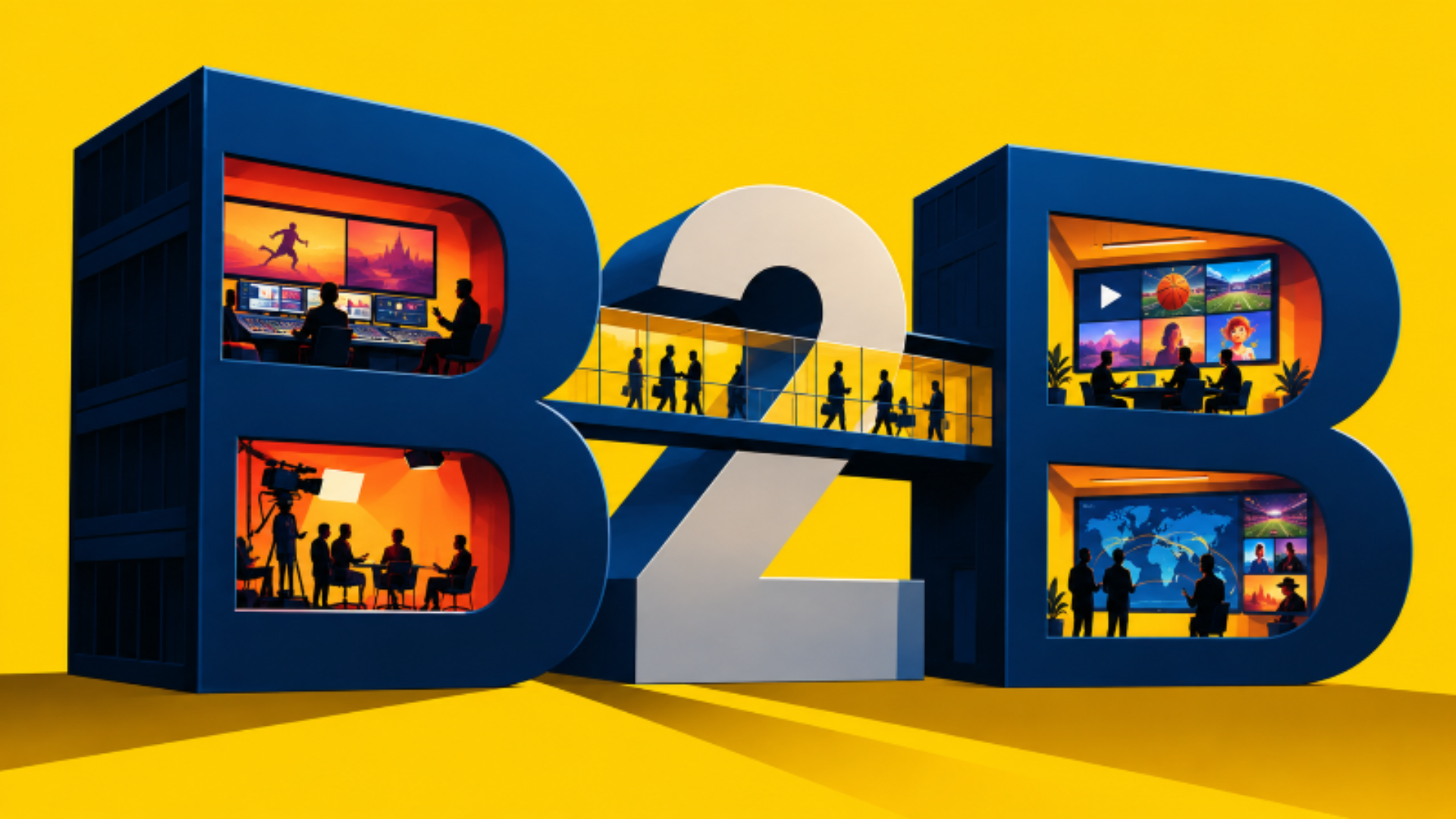
Skydance is targeting at least $6 billion in annual cost savings following Paramount's acquisition of Warner Bros. Discovery. Netflix is cutting roughly 1,000 jobs, NBCUniversal is expanding wholesale distribution through YouTube, and companies like Bending Spoons and Deltatre are consolidating the B2B media technology market.
Across the industry, media companies are reconsidering their technology investments, vendor relationships, and operating costs.
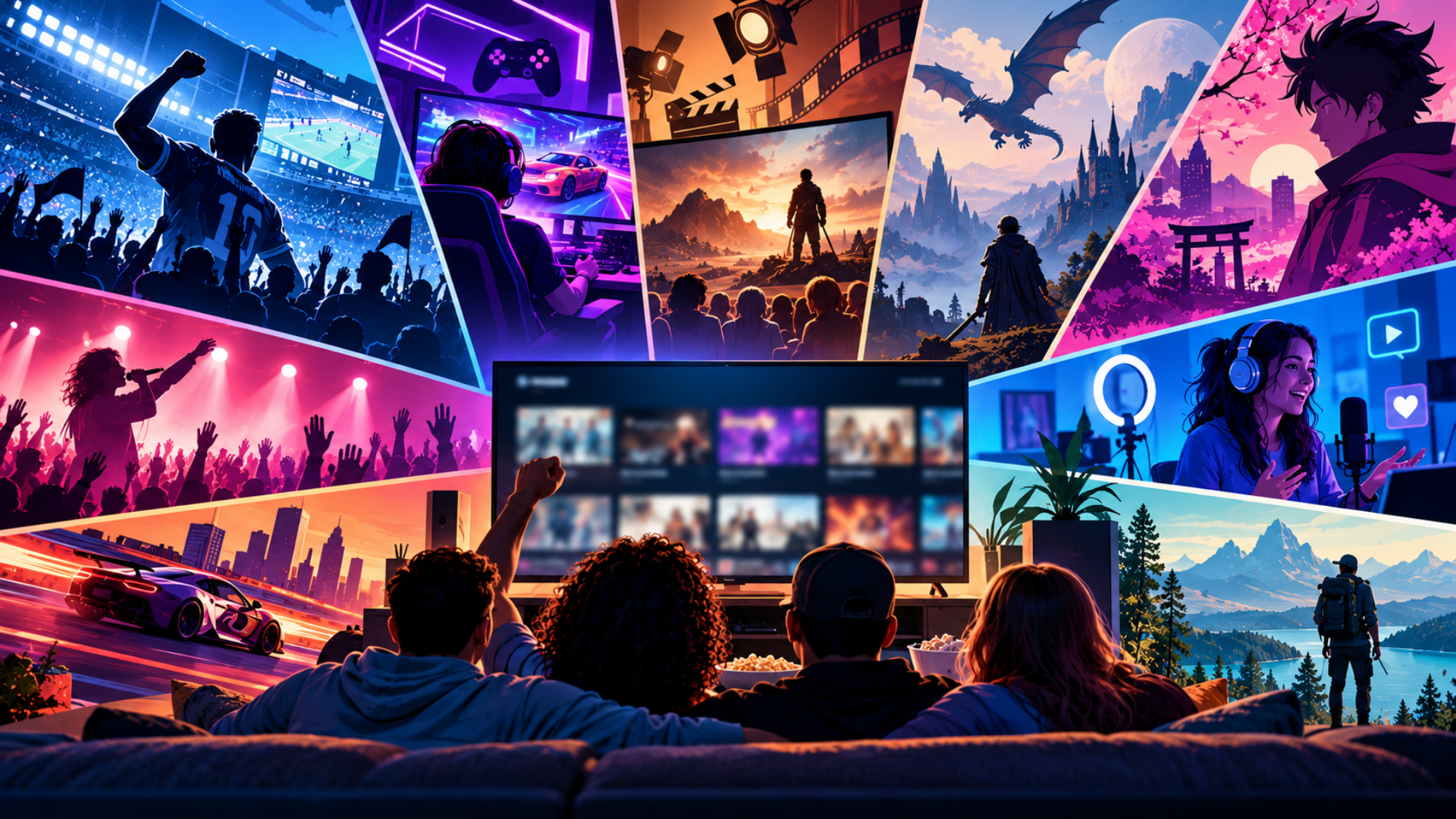
Passion, Not Persona: Building CTV Audiences Around Fandom
Read More
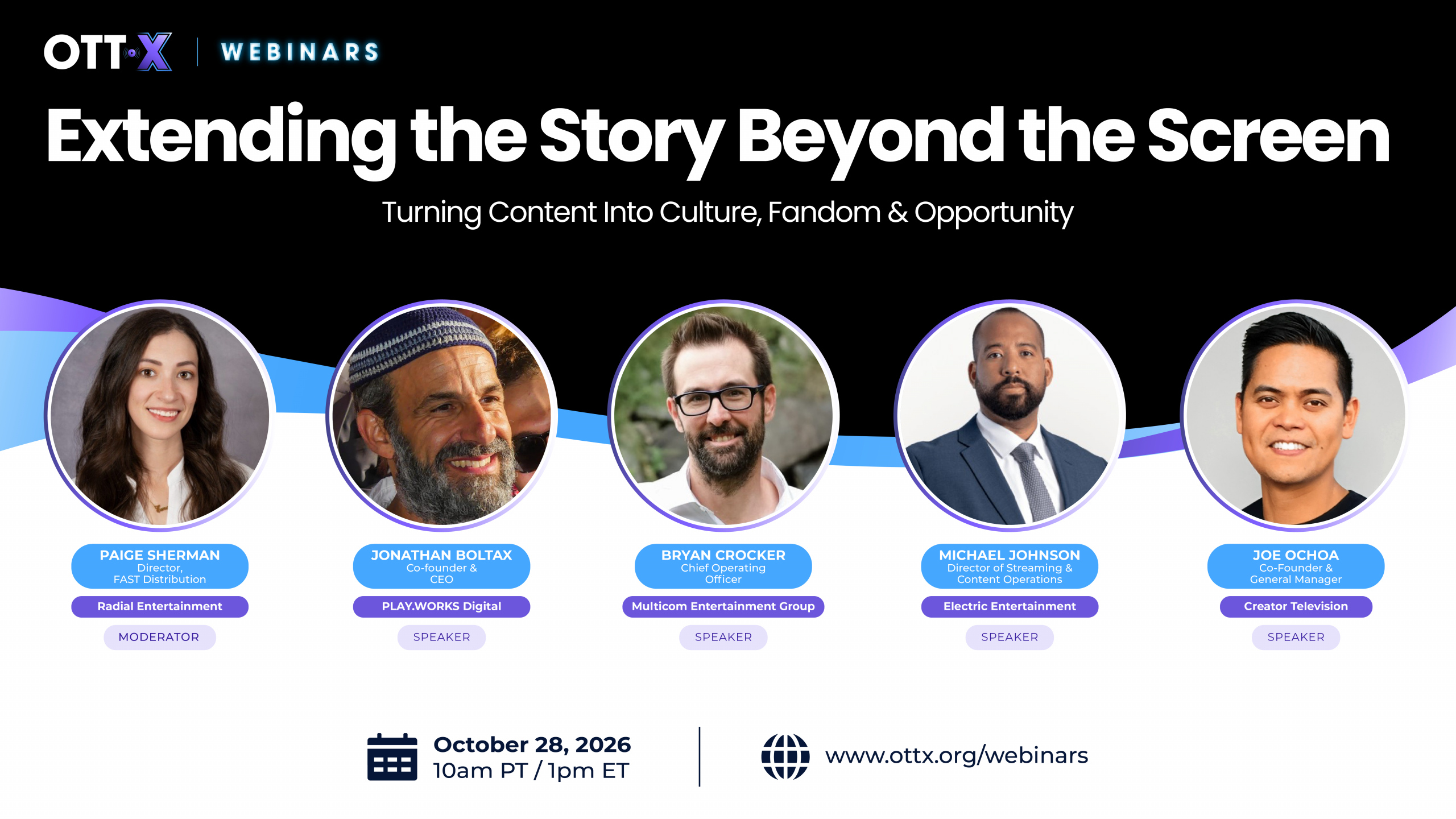
Next Week - Extending the Story Beyond the Screen: Turning Content Into Culture, Fandom & Opportunity
Read More
CTV Share of Ad Exposure Time Rises but Sees Gap with Viewership
Read More

FIFA Opens Up Bidding for U.S. Rights to 2030 World Cup
Read More
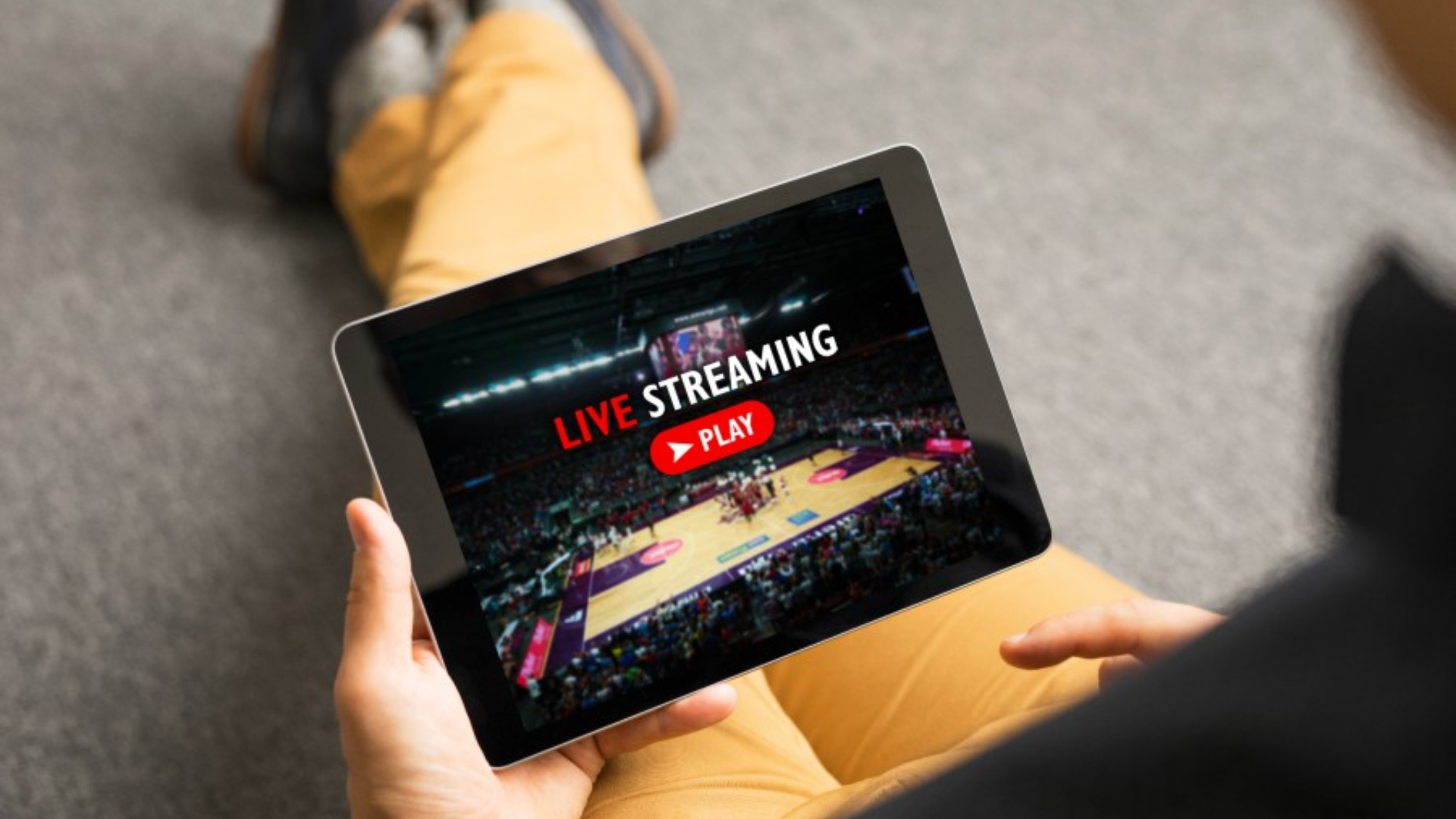
Parks: 39% of U.S. Internet Households Watch Live Events – Sports on Streaming Services
Read More

OTT.X Members Save 25% on Future of Video
Read More
Media Tech Is Consolidating. Do Buyers Have a Reason to Keep You Around?
Skydance is targeting at least $6 billion in annual cost savings following Paramount's acquisition of Warner Bros. Discovery. Netflix is cutting roughly 1,000 jobs, NBCUniversal is expanding wholesale distribution through YouTube, and companies like Bending Spoons and Deltatre are consolidating the B2B media technology market.
Across the industry, media companies are reconsidering their technology investments, vendor relationships, and operating costs.
The Take
These changes are creating opportunities for technology companies that can reduce costs, simplify operations, and replace expensive internal workflows.
They're also exposing a problem I've been hearing from media-company buyers for years.
Too many technology vendors sound exactly the same.
With buyers consolidating contracts and larger suppliers expanding their portfolios, differentiation is becoming increasingly important.
In the full column, I examine where technology spending could shift, how vendors can capitalize on consolidation, and why a company's ability to explain its value may ultimately determine whether it makes the shortlist.
Read the Full Analysis: The Streaming Wars
Passion, Not Persona: Building CTV Audiences Around Fandom
As media consumption fragments across connected TV (CTV) platforms, age brackets alone fail to capture consumer motivation.
For years, CTV advertising has operated on a foundational assumption: demographic cohorts such as age, gender, and income are the best proxy for consumer intent. That assumption still shapes buying today: nearly 30% of US marketers prioritize demographic targeting for CTV ads, almost three times more than contextual approaches, per a July 2025 Gracenote survey.
Today, the highest-performing CTV strategies center on passion rather than profiles. Fandoms surrounding gaming franchises, anime, sports, and cult entertainment deliver brand recall and purchase intent that traditional demographics cannot match.
Three forces are converging to redefine CTV audience targeting: premium intellectual property (IP), device-native streaming, and AI-powered programmatic infrastructure.
Unlocking authenticated signals at scale
Technology that lets advertisers reach passionate communities programmatically at scale is driving the shift toward fandom targeting.
"I think this is the first time that we've really been able to target fans at scale programmatically," noted Nicole Scaglione, vice president of CTV/OTT & OLV at PubMatic. "Demographics tell us a lot about where a person is, but fandom tells us what they love. Taking that insight gives us a contextualized connection that we didn't have before."
That connection depends on device-native environments where users are authenticated and logged in. PlayStation is one such platform, sitting where entertainment, gaming, and media intersect.
"For us, fandom is the intersection of where users are, their passions are, where it hits media, and that's an incredible opportunity for advertisers," explained Jason White, vice president of Ads at Sony Pictures Entertainment. White highlighted how Sony maps IP across ecosystems while transitioning AAA franchises like "The Last of Us" from gaming IP to television, while hosting sports, anime, and gaming hubs on PlayStation.
Read the Full Story: EMARKETER
Next Week - Extending the Story Beyond the Screen: Turning Content Into Culture, Fandom & Opportunity
Hear from leaders at PLAY.WORKS Digital, Multicom Entertainment Group, Electric Entertainment, Creator Television, and Radial Entertainment as they explore how content can build deeper audience connections through programming, gaming, creator communities, marketing, and interactive experiences.
Using Halloween as a timely starting point, the conversation will look at how seasonal moments, anniversaries, cultural trends, and fandom can bring renewed attention to films, series, and library content while introducing them to new audiences.
Speakers:
- Jonathan Boltax, Co-Founder & CEO, PLAY.WORKS Digital
- Bryan Crocker, Chief Operating Officer, Multicom Entertainment Group
- Michael Johnson, Director of Streaming & Content Operations, Electric Entertainment
- Joe Ochoa, Co-Founder & General Manager, Creator Television
- Paige Sherman, Director, FAST Distribution, Radial Entertainment
The panel will also explore how creator content, gaming, FAST, AVOD, and emerging distribution opportunities can extend the life of entertainment beyond the initial viewing experience, creating more ways for audiences to participate, discover, and stay connected.
Explore how content can become culture, build fandom, and create value long after the credits.
CTV Share of Ad Exposure Time Rises but Sees Gap with Viewership
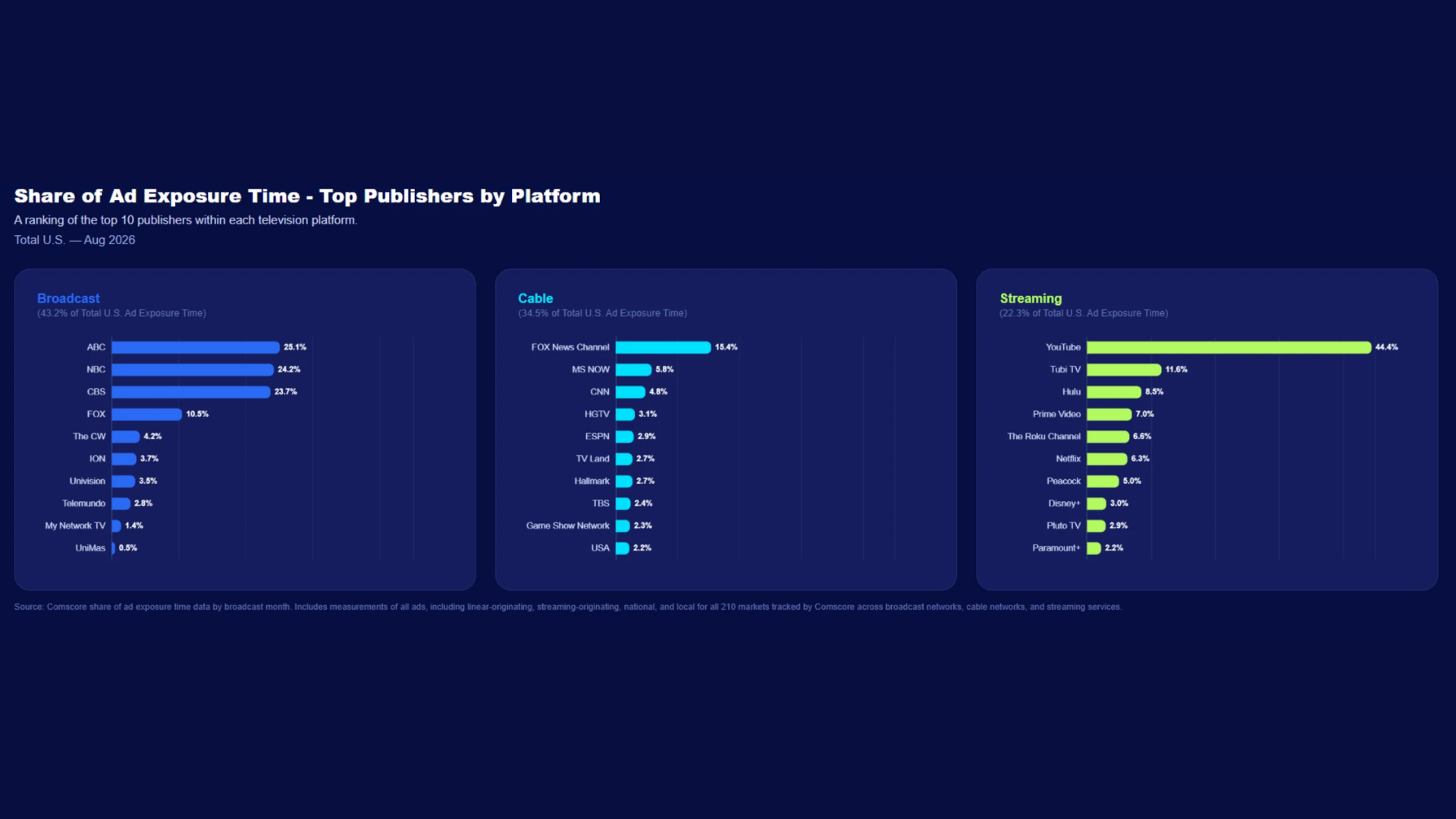
Despite continued trends towards consumption of streaming on CTV and use of free or ad-supported streaming services in the U.S. a new Score Report from Comscore shows there’s a gap between CTV viewership and the category’s share of ad exposure time.
But similar to its leading rank in the monthly share of TV time reported by Nielsen’s the Gauge, YouTube also regularly dominates share among streamers for the new ad exposure metric measured monthly by Comcsore’s The Score Report.
The monthly report, launched Wednesday, shows the percentage of total TV Ad Exposure time across categories and providers, only measuring ads exposed on an in-home TV device. For streaming this includes smart TVs and connected TV streaming devices, but not exposure on desk/laptops, mobile phones or tablets.
The August edition found that broadcast platforms are still the strong leader for share of ad exposure time at 43.2%, followed by cable at 34.5%, with streaming trailing in third at 22.3%.
Comscore noted this contrasts with viewership trends, including over 74% of U.S. households streaming content on connected TV. In addition, the firm noted 130.6 million U.S. adults used a free or ad-supported streaming video in the three months prior to August 2026, representing 47% of the total U.S. population.
“Given this gap, while broadcast - with its well-understood formats and measurement - is still favored by many brands, an opportunity exists for advertisers to capitalize on existing and emerging streaming opportunities,” stated Comscore.
But while still lagging, streaming’s share of ad exposure time is on the rise. Its share steadily climbed 6.2 percentage points over the 12 months ending in August 20206, up from 16.1% in August 2025. Starting in February, streaming accounted for at least one-fifth of the measured ad exposure each month.
Read the Full Story: StreamTV Insider
FIFA Opens Up Bidding for U.S. Rights to 2030 World Cup
FIFA has officially opened up the bidding process for the 2030 World Cup, bringing one of the sporting world’s premier events to the market. FIFA launched an Invitation To Tender for the rights covering the U.S. and Puerto Rico Thursday for the games, which will be held in Portugal, Spain and Morocco.
Bidders will also be able to secure rights to the 2034 World Cup in SaudiArabia as an option in the process.
The World Cup rights are widely expected to draw interest from a wide array of bidders, especially given the record-smashing viewership of the 2026 FIFA World Cup, which were ratings bonanzas for U.S. rightsholders Fox and Telemundo (which held Spanish-language rights).
“The FIFA World Cup 2026 belonged to the fans. They turned every match into a celebration of football and culture, and the atmosphere in the stadiums extended to millions of households across the United States,” said FIFA Secretary General Mattias Grafström in a statement. “The next two FIFA World Cups will build on that momentum. We are looking for a partner who shares our commitment to innovation, who can bring every moment of the action to fans wherever and however they choose to watch, and who is committed to the next phase of football’s growth in North America.”
Fox is expected to be in the mix, while NBCUniversal (which owns Telemundo) is sure to look as well, perhaps at the entire package of rights. Disney’s ESPN has made no secret of its desire to bring the World Cup back to its platforms. And then there’s the Netflix’s Prime Videos and YouTubes of the world, with Netflix already securing World Cup rights in Spain for the 2030 games, and which will stream the Women’s World Cup in the U.S. next year.
“We are excited to see how the possible partners will react after this announcement, after the great success we all experienced for the last World Cup 2026,” FIFA chief business officer Romy Gai told reporters Thursday.
Read the Full Story: The Hollywood Reporter
Parks: 39% of U.S. Internet Households Watch Live Events – Sports on Streaming Services
Parks Associates Oct. 21 reported that 39% of U.S. internet households watch live events or sports through an on-demand streaming service, showing the growing role of streaming services in delivering live programming.
The expanding mix of options to watch video is changing how consumers find and watch sports, news, and events, as live video viewing is no longer synonymous with pay TV.
Parks data found that 25% of households watch live video through free ad-supported television (FAST) services, and 21% don’t watch live video at all.
“Consumers value live content but struggle to find and access it,” said Michael Goodman, director of entertainment research at Parks. “The challenge for providers is making live content accessible. Sports is a good example, with programming now distributed across multiple services and platforms.”
Consumer interest in live sports is growing alongside broad-appeal entertainment. According to Parks, comedy (60%), drama (56%), and news (50%) are the most popular content categories, while 48% report watching live sports. SVOD services continue to add sports, news, and live events while FAST services build engagement through curated linear channels.
“Competition for viewers is increasingly about more than the content itself,” Goodman said. “Providers need to deliver an experience that makes it easy for consumers to find, access, and move between live and on-demand programming.”
Read the Full Story: Media Play News
OTT.X Members Save 25% on Future of Video
November 17–18, 2026 | Marina del Rey, California
Parks Associates’ Future of Video: Business of Streaming brings industry leaders together for two days of conversations focused on the strategies, technologies, and business models shaping the next phase of video.
The program will explore evolving viewing habits, monetization and advertising, streaming business models, and the changing relationships between content providers, platforms, distributors, and audiences.
Alongside the programming, Future of Video offers an opportunity to connect with peers from across the streaming ecosystem and exchange ideas around the challenges and opportunities ahead.
OTT.X members receive 25% off registration. Use code STREAMING2026 when registering.
In Case You Missed It
- Netflix Cuts $300 Million From Its Ad Forecast, Putting Its Rebuilt Team on the Hook to Close the Ad-Tier Revenue Gap. The Streaming Wars
- Ask Skip: Why Does the Content Chief Take So Much of the Heat?. The Streaming Wars
- What It Takes to Build a Netflix-Like Recommendation Engine. The Streaming Wars
- Korai Flix Seeks a $3.5 Billion SPAC Valuation With No Cash Floor, Putting Paid Demand Under Scrutiny. The Streaming Wars
- Disney Signs Dude Perfect to Turn YouTube Reach Into Demand for Marvel, Sports and Parks. The Streaming Wars
- NFL and NBA Command Nearly $20 Billion in Rights Value, Putting Sports-Only Streamers at a Bidding Disadvantage. The Streaming Wars
- Fox Opens Linear TV Buying to Agency AI Agents, Making Its Inventory Easier to Buy Alongside CTV. The Streaming Wars
- Netflix Taps Peter Rice to Run $20 Billion in Content as Viewing Growth Trails Revenue. The Streaming Wars
Powered by

FOR B2B TECHNOLOGY COMPANIES DONE BLENDING IN.
Most companies don't have a product problem.
They have a positioning problem.
43Twenty helps B2B technology companies define their category, sharpen their narrative, and build market perception that creates leverage.
Because when buyers understand why you matter, growth gets easier.
-
No buzzwords.
-
No content spam.
-
No shortcuts.
If everyone else sounds the same, that’s your opening.
We help you take it.