
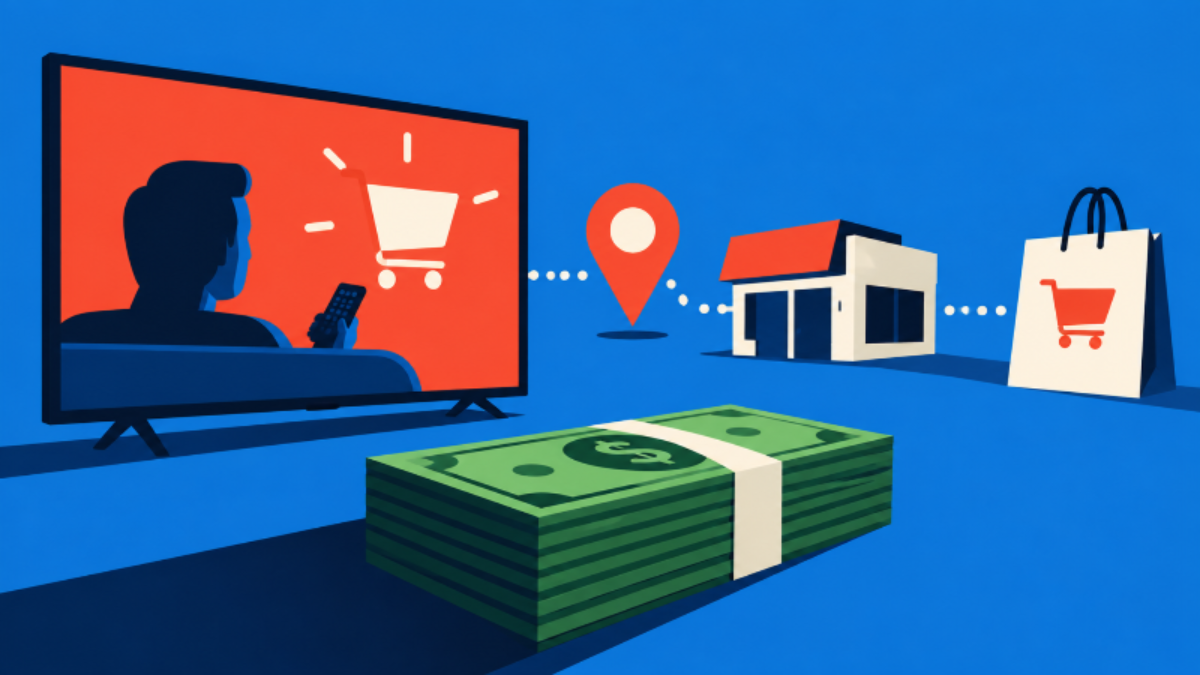
CTV advertisers increasingly expect campaign reports to connect an impression with a real-world outcome.
Infillion is buying Foursquare to add store-visit data to the purchase intelligence it already owns through Catalina. Best Buy Ads will begin selling Fire TV inventory on Insignia TVs in February 2027, giving its retail media business another place to apply its first-party purchase data. Meanwhile, Google’s €403 million location-data fine in Ireland shows the regulatory cost attached to one of the signals used to connect advertising with store visits.
This Wednesday: EPG, SCTE & Sports Data Roundtables
Read More
DAZN Takes Steps Toward Being NBA’s Local TV Hub
Read More

Gen Z Is Warming Up to TV Ads as Streaming Costs Rise
Read More
IBC 2026 Highlights the Business Impact of AI, Sports, and Streaming
Read More
OTT.X Members Save 25% on Future of Video
Read More
Connecting the Ad to the Sale Is Getting Expensive
CTV advertisers increasingly expect campaign reports to connect an impression with a real-world outcome.
Infillion is buying Foursquare to add store-visit data to the purchase intelligence it already owns through Catalina. Best Buy Ads will begin selling Fire TV inventory on Insignia TVs in February 2027, giving its retail media business another place to apply its first-party purchase data. Meanwhile, Google’s €403 million location-data fine in Ireland shows the regulatory cost attached to one of the signals used to connect advertising with store visits.
The Take
Closed-loop CTV measurement requires more than inventory and ad-serving technology. Sellers increasingly need purchase data, location signals, identity matching and contractual rights that determine how those datasets can be connected.
Owning more of that stack can reduce vendor fees and create more measurement products to sell. It also adds data, compliance and operating costs.
Advertisers want CTV sellers to get closer to the sale. Every piece of data required to make that connection has a price, and that price is becoming part of the economics of the media itself.
Read the Full Analysis: The Streaming Wars
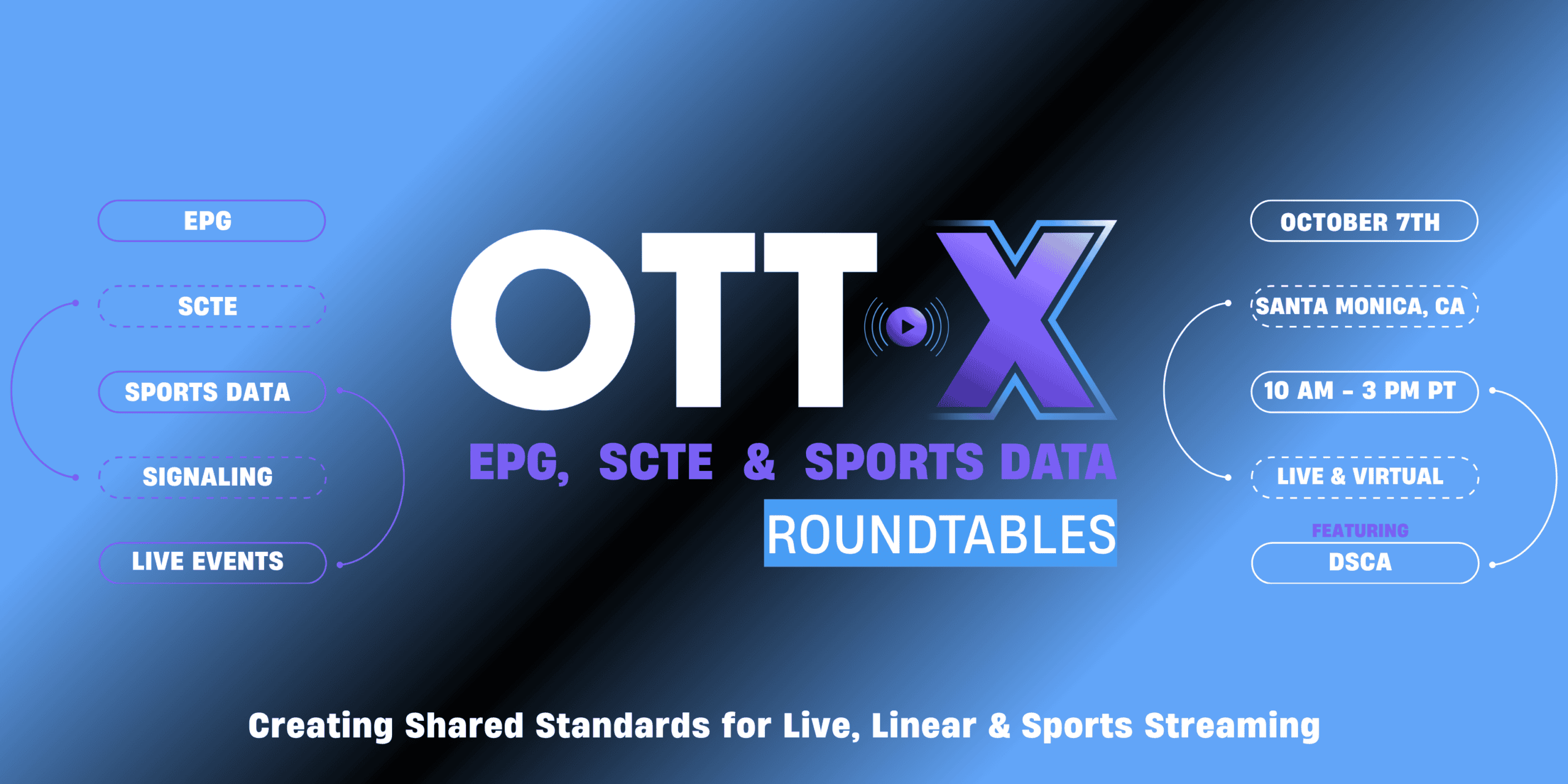
This Wednesday: EPG, SCTE & Sports Data Roundtables
October 7th, 2026 | 10:00 AM - 3:00 PM
Roku Offices | Santa Monica, CA
OTT.X will host interactive roundtables focused on the nearly completed DSCA EPG Specification and ongoing work around sports data, taxonomy, and metadata. These sessions bring together existing working group participants and additional industry stakeholders to address open issues and contribute practical perspectives.
The EPG Roundtable will focus on implementation, metadata, SCTE signaling, and the remaining gaps as the DSCA EPG Specification moves toward completion. Participants will explore how the specification can support live and scheduled programming across streaming platforms.
The Sports Data Roundtable will continue work on identifying leagues, teams, events, seasons, and competitions, along with live programming, replays, highlights, and schedule changes. Discussion will also examine how sports data connects with EPG metadata, discovery, and signaling.
Executives and senior practitioners working across metadata, sports data, live TV, FAST, CTV, OEM platforms, and technical operations are encouraged to participate. Participation is free for OTT.X members, existing working group participants, and industry professionals working directly in these areas. In-person space is limited, with virtual participation also available.
DAZN Takes Steps Toward Being NBA’s Local TV Hub
The NBA doesn’t have a local TV hub just yet. But that hasn’t stopped DAZN from trying to play the part of one for this season.
Over the course of the offseason, the sports-focused streamer has strengthened its eventual play to house the NBA’s local rights as the regional sports network structure continues to erode.
While talks have honed in on a billion-dollar price tag and YouTube playing favorite to land the deal, DAZN has been vying to enter the ring as well.
The London-based service has acquired the local rights to over a third of the NBA in some way, shape or form for the 2026-27 season. DAZN will be the exclusive home of non-national games for the Indiana Pacers, Cleveland Cavaliers, Memphis Grizzlies, Minnesota Timberwolves and San Antonio Spurs. Additionally, Brooklyn Nets, Charlotte Hornets, Detroit Pistons, New York Knicks, Orlando Magic and Washington Wizards games are also included — in a non-exclusive capacity.
This shouldn’t be confused with the NBA’s existing NBA League Pass subscription model, which gives fans access to all out-of-market games for a similar price as DAZN is offering ($119.99 for the season). So fans in these markets will only be getting their local teams with DAZN, and would need League Pass on top of that — plus Peacock, ESPN and Amazon Prime subscriptions — to see every game during the season.
But in lieu of free, over-the-air local broadcast options (which do exist in some of these markets), DAZN has quickly emerged as the go-to streaming option to subscribe to.
The bigger questions, then become: How many teams can DAZN or any other partner launch with once named the official hub? And does the league truly need a local hub when multiple markets won’t be included initially, and having local games on on different services in different markets don’t really impact one another?
Read the Full Story: TVREV
Gen Z Is Warming Up to TV Ads as Streaming Costs Rise
Higher streaming bills are changing the advertising equation. For Gen Z, the opportunity to save money is making ad-supported viewing increasingly appealing.
Hub Entertainment Research finds that 72% of Gen Z viewers say streaming price increases have made them more receptive to lower-priced, ad-supported plans, compared with 62% of Gen X and Baby Boomers. As subscription costs climb, younger audiences are becoming more willing to trade commercial breaks for a more affordable viewing experience.
Nearly two-thirds of Gen Z viewers would almost always choose an ad-supported option if it saved them $4–$5 per month. That preference is even stronger among Gen X and Baby Boomers, at roughly three-quarters, showing that the appeal of subscription savings extends across generations.
Gen Z is also more open to heavier ad loads in exchange for lower prices. One-third would accept twice as many advertisements for a plan costing $8–$9 per month, compared with 21% of older viewers. The findings suggest that younger audiences may give platforms more flexibility to balance subscription pricing and advertising.
Attitudes toward the ads themselves are changing, too. Nearly two-thirds of viewers across the generations surveyed say TV ads bother them less than they once did, while younger viewers report that ads have become more relevant to them. For streaming platforms and advertisers, the opportunity is to pair affordable access with advertising that earns viewers’ attention.
Read the Full Story: Hub Intel
Fremantale, Roseberry Reimagine Neighbors as Vertical Series
Vertical TV platform RoseBerry and Fremantle have partnered to bring Neighbours to a new generation of mobile-first viewers, with the iconic Australian soap being reimagined as a vertical series this autumn.
The project will see storylines from the Neighbours archive transformed into short-form, vertical-native episodes through RedSnapper, RoseBerry’s proprietary AI-assisted production workflow for transforming television and film libraries into vertical entertainment.
Neighbours is one of TV’s most enduring dramas. First launched in 1985, the Australian soap spanned more than 40 years and over 9,300 episodes, captivating audiences around the world and becoming one of Australia’s most successful entertainment exports. Renowned for its storytelling and cultural impact, Neighbours has also served as a launchpad for some of the industry’s biggest names, including Kylie Minogue, Jason Donovan, Guy Pearce and Margot Robbie. The series ended in December 2025 after being revived by Prime Video.
The first Neighbours vertical series will launch on epis, RoseBerry’s direct-to-consumer streaming service for vertical television, reimagining some of the soap’s most engaging and recognisable story arcs for mobile-first audiences.
Guy Hameiri, Co-Founder and CEO of RoseBerry Media, commented: “Neighbours is an iconic piece of television history and exactly the kind of premium entertainment IP we believe can thrive in the vertical format. This is the first time we’ve had the opportunity to apply RedSnapper to a long-running soap with such a rich library of characters, storylines and cultural moments, and Fremantle has been a fantastic partner in helping bring that vision to life. For RoseBerry, this is a powerful proof point for the infrastructure we are building to support the future of premium vertical television. By combining proprietary technology, audience intelligence and distribution capabilities, we’re enabling rights holders to reimagine established libraries for mobile-first audiences, generate new insights and unlock new commercial opportunities.
Read the Full Story: Advanced Television

IBC 2026 Highlights the Business Impact of AI, Sports, and Streaming
IBC 2026, held in Amsterdam from September 11-14, drew 41,225 attendees from 170 countries and more than 1,300 exhibitors, according to the IBC. This was down 6% from 43,085 attendees in 2025. IBC 2026 is the annual International Broadcasting Convention, a leading global trade show and conference for the media, entertainment, and technology industries.
This year’s IBC focused more on practical deployments than proof of concept or pilots. IBC’s nine Accelerator challenges covered areas including agentic AI, live streaming, accessibility and content provenance. The overall message was that media companies are looking for measurable gains in production speed, reach and revenue from technologies they can put to work now. IBC 2026.
Key takeaways include the following.
AI moved deeper into everyday production.
The clearest shift was from isolated AI demonstrations to tools embedded in editing, asset search, live production and publishing workflows. Netflix said it is opening its Media Production Suite to approved third-party tools. Avid introduced an agent orchestration layer for production teams and Amagi demonstrated automated live sports storytelling. These announcements point to faster content turnaround, with control over rights and editorial decisions remaining a central requirement.
Live sports drove both product design and business strategy.
Sports was a major focus across the conference and IBC’s innovation projects, particularly personalized viewing, automated highlights and more efficient live delivery. AWS announced on-demand multiview, real-time video metadata, automated ad backfill and ad insertion for low-latency streams. Together, these capabilities show how suppliers are trying to turn premium sports rights into more viewing options and ad inventory.
Read the Full Story: Parks Associates
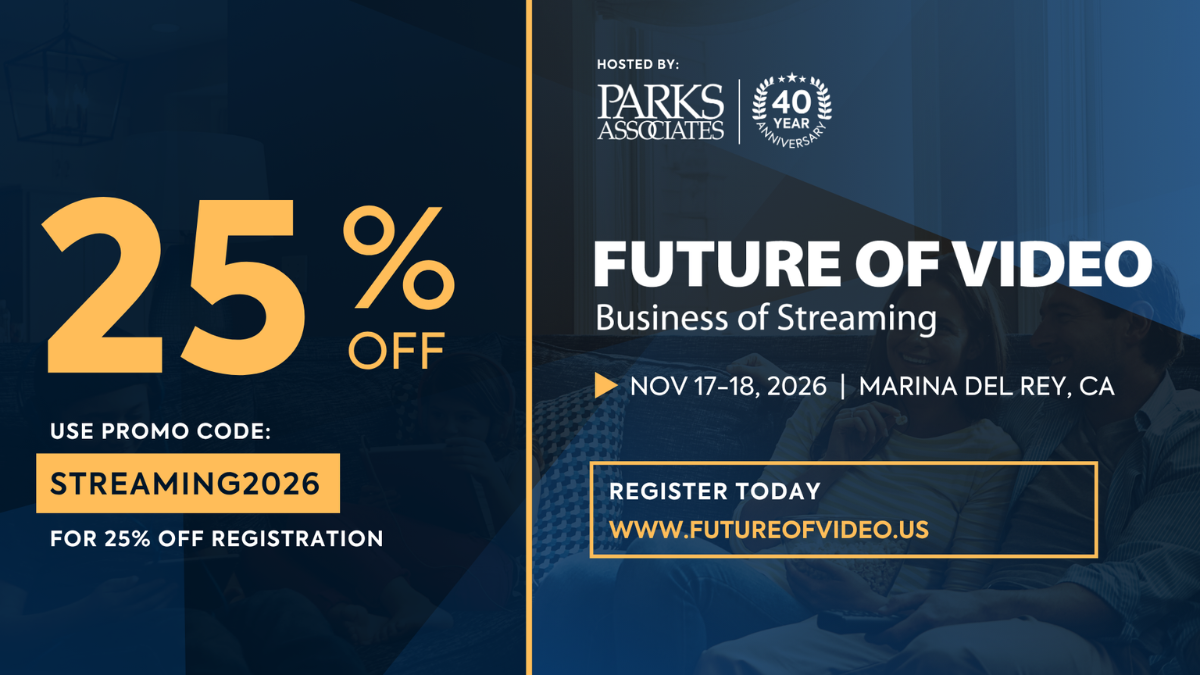
OTT.X Members Save 25% on Future of Video
November 17–18, 2026 | Marina del Rey, California
Where is the business of streaming headed next? Parks Associates will bring industry leaders together for Future of Video: Business of Streaming, a two-day event focused on the decisions shaping the video marketplace.
The program offers an opportunity to step back from day-to-day challenges and examine the larger shifts affecting the industry: how viewing habits are changing, where streaming business models are gaining traction, and what advertisers, content providers, and distributors need from one another to grow. Attendees can expect conversations spanning monetization, technology, and the evolving relationships between platforms and audiences.
It is also a chance to connect in person with peers from across the streaming ecosystem and bring new ideas and relationships back to your team.
OTT.X members receive 25% off registration. Use code STREAMING2026 when registering.
More Information & Registration: Parks Associates Future of Video
In Case You Missed It
- Every Tile on the TV Home Screen Has an Opportunity Cost. The Streaming Wars
- Paramount’s $6 Billion Synergy Plan Is About to Hit the Org Chart. The Streaming Wars
- Ask Skip: What Can You Really Negotiate With a TV OS?. The Streaming Wars
- The WNBA Playoffs Have a Streaming Gap. The Streaming Wars
- How Workflow Orchestration Turns Schedules Into Live and FAST Channels. The Streaming Wars
- AT&T’s $3 Billion Fiber Bet Captures Streaming Growth Without the Programming Bill. The Streaming Wars
- Netflix’s September Exits Put Catalog Rights Back Into Play. The Streaming Wars
- Bango Now Manages 25.6 Million Subscriptions. The Streaming Wars
Powered by

FOR B2B TECHNOLOGY COMPANIES DONE BLENDING IN.
Most companies don't have a product problem.
They have a positioning problem.
43Twenty helps B2B technology companies define their category, sharpen their narrative, and build market perception that creates leverage.
Because when buyers understand why you matter, growth gets easier.
-
No buzzwords.
-
No content spam.
-
No shortcuts.
If everyone else sounds the same, that’s your opening.
We help you take it.