
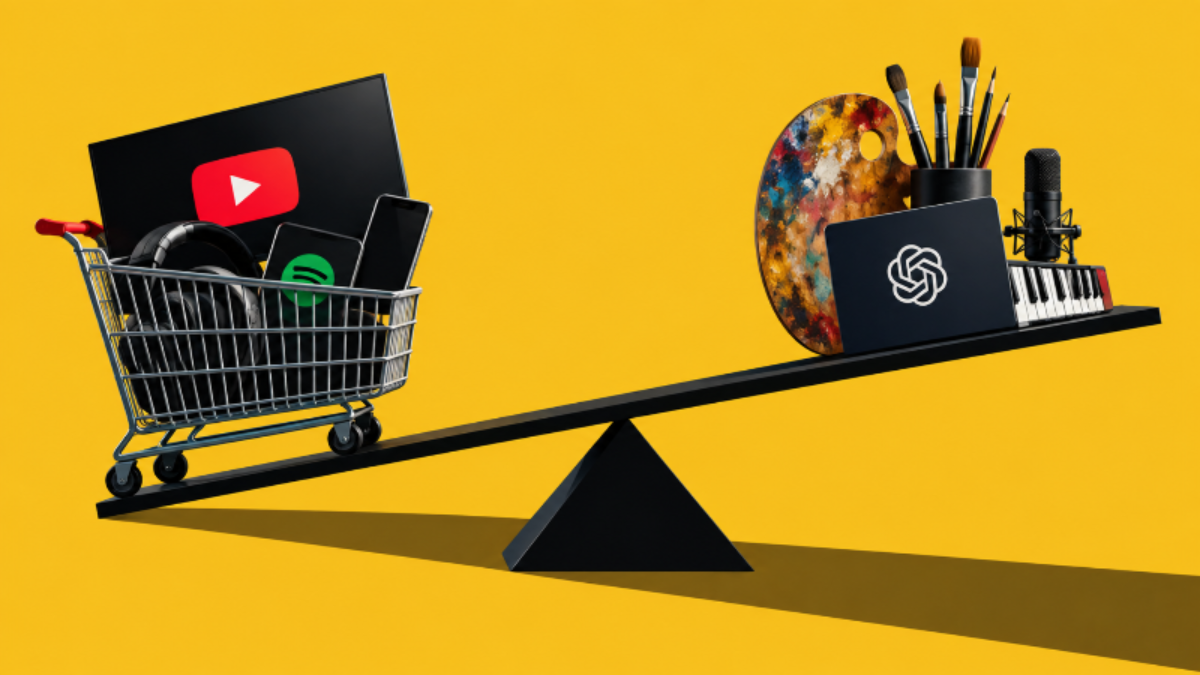
AI is making media production faster and cheaper, but the financial upside is landing unevenly across the value chain.
Artists can use AI to reduce production costs while worrying about AI reducing the value of their own work. Streaming companies see productivity gains while employees see potential headcount reductions. Vendors can deliver projects faster, but clients increasingly expect those efficiencies to show up in pricing.
The same economic incentives help explain fights over YouTube’s place in the TV market and the music industry’s shift from debating whether AI-generated music is legitimate toward building rules around licensing, disclosure, consent and compensation.
If Everyone Can Launch DTC, Who Actually Should?
Read More
Parks Associates: Fox-Roku Deal Highlights Value of TV Operating Systems
Read More
How AI Is Rewriting The Economics Of Streaming Advertising
Read More
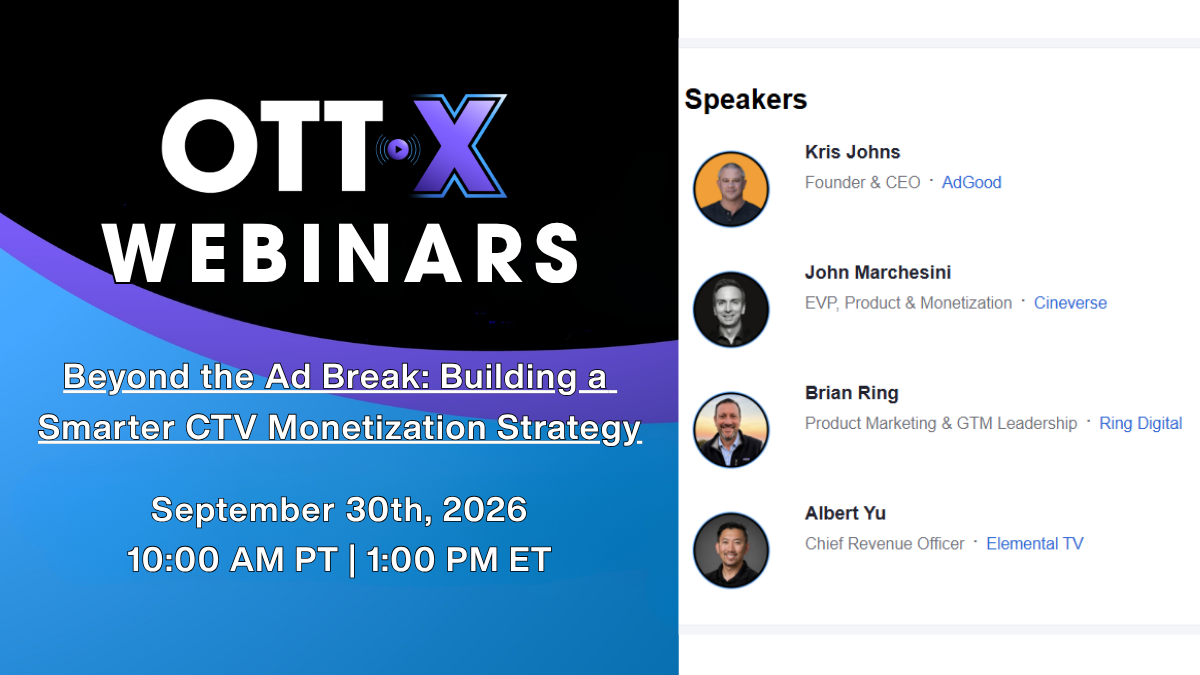
September 30 - Beyond the Ad Break: Building a Smarter CTV Monetization Strategy
Read More

Cineverse’s Giant Worldwide Launches New Global Movie and Television Aggregation Service
Read More
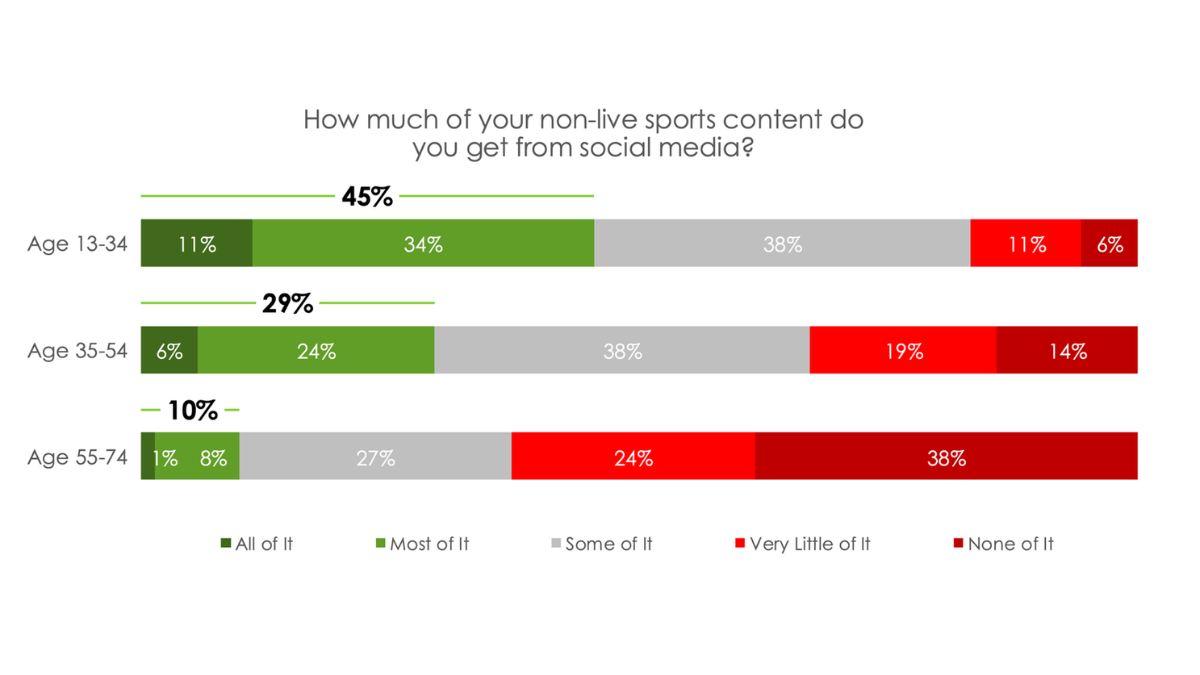
Hub: Younger Fans Fueling Uptick in Sports TV Viewership
Read More
YouTube Isn’t TV. AI Isn’t Art. Depending on Who Gets Disrupted
AI is making media production faster and cheaper, but the financial upside is landing unevenly across the value chain.
Artists can use AI to reduce production costs while worrying about AI reducing the value of their own work. Streaming companies see productivity gains while employees see potential headcount reductions. Vendors can deliver projects faster, but clients increasingly expect those efficiencies to show up in pricing.
The same economic incentives help explain fights over YouTube’s place in the TV market and the music industry’s shift from debating whether AI-generated music is legitimate toward building rules around licensing, disclosure, consent and compensation.
The Take
The biggest question around AI in media is becoming less philosophical and more financial: Who gets the productivity dividend?
As AI becomes normal infrastructure, the answer will show up in pricing, margins, headcount, rights agreements and bargaining power.
Streaming companies will eventually have to prove where their AI productivity gains landed, whether through lower costs, faster roadmaps, greater output or higher margins. Rights holders, creators, vendors, employees and customers will all be fighting for a share of the same efficiency gains.
That fight will shape the economics of AI in media long after the arguments over whether AI counts as art, music or creativity have moved on.
Read the Full Analysis: The Streaming Wars
If Everyone Can Launch DTC, Who Actually Should?
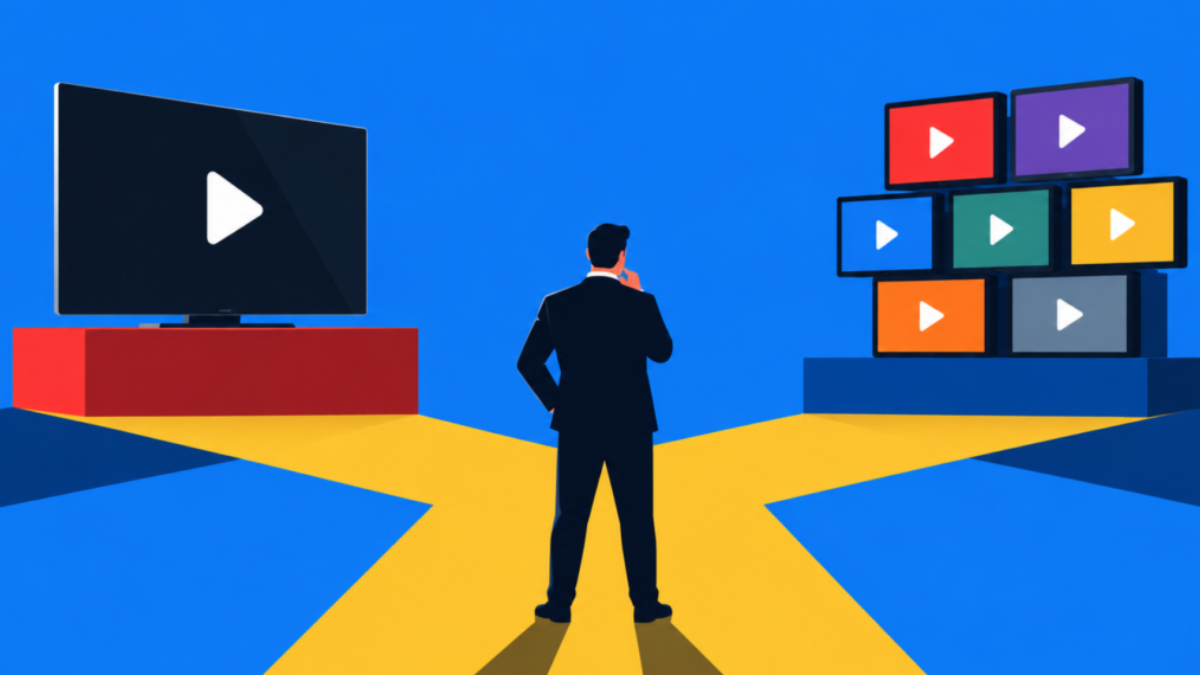
Not everyone who can launch a streaming service should. The technology has become easier to buy, but acquiring subscribers, keeping them, and running the business still costs a shitload of money.
Versant is testing two different answers to the same distribution question. MS NOW launches its direct membership today at $7.99 per month with a 24/7 network feed, original programming, community features, and direct interaction with its journalists. USA Sports has been accumulating WNBA, Pac-12, Bundesliga, golf, and other rights without launching a standalone paid streaming service. Most Bundesliga matches are instead streaming free on Fandango with no subscription or login required.
A company should launch DTC when the retail margin, customer relationship, and additional monetization it can capture exceed the cost of acquiring customers, operating the service, replacing churn, and potentially weakening the distribution business it already has.
Direct Demand Has to Pay for Direct Distribution
A network can have millions of viewers, a league can have passionate fans, and a studio can own recognizable franchises without producing enough people willing to find another app, create another account, enter another credit card, and accept another recurring charge. Watching something when it’s already in your bundle is very different from deciding it’s worth another monthly bill.
Distribution partners get paid because they remove some of that friction. They already have customers, billing relationships, devices, merchandising surfaces, recommendation systems, and habitual traffic. A content owner going direct takes responsibility for replacing those functions, which turns customer acquisition from somebody else’s problem into an operating expense.
MS NOW has a rational reason to test that expense. Its product has frequent programming, recognizable personalities, a 24/7 feed, and interactive features designed specifically for paying members. Versant also says MS NOW reaches substantial audiences outside traditional TV, giving the service a pool of consumers it can attempt to convert directly. The conversion rate will determine whether any of that audience reach has subscription value.
Read the Full Story: The Streaming Wars
Parks Associates: Fox-Roku Deal Highlights Value of TV Operating Systems
Fox Corporation’s commitment to spend $22 billion to acquire streaming platform developer Roku further highlights the growing role that television operating systems are playing in the media and entertainment business, according to new research released this week by Parks Associates.
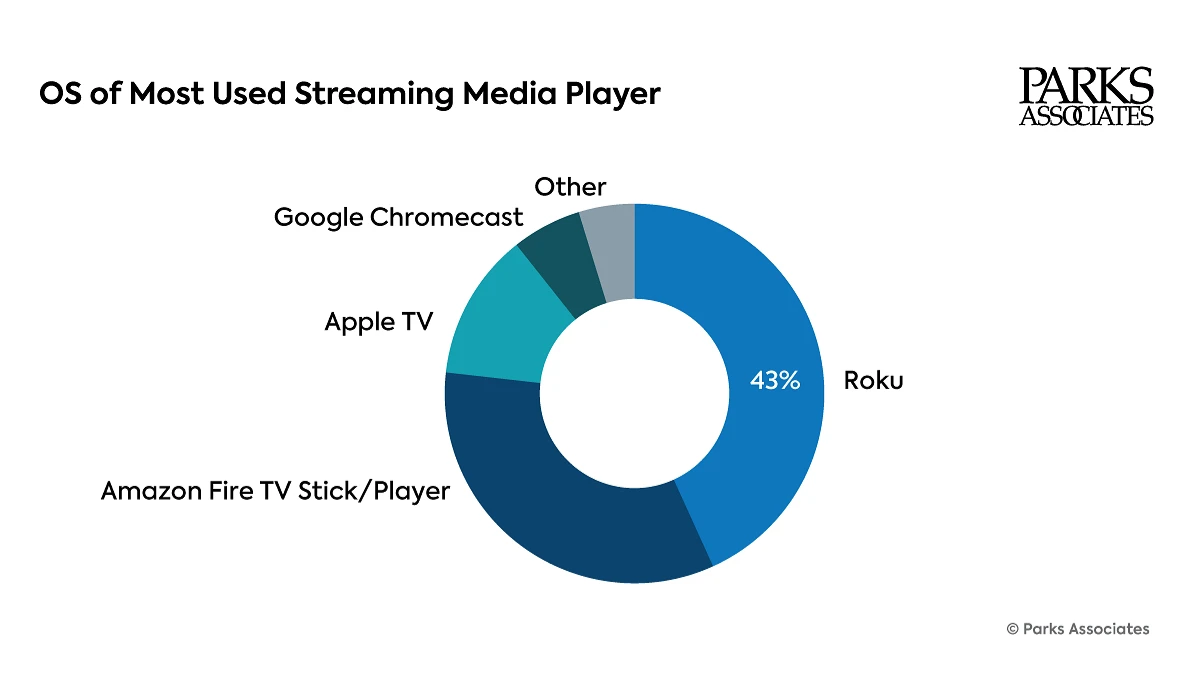
Based on a survey of more than 8,000 American households, Parks’ latest “Tech Ecosystem Dashboard” refresh shows nearly half of all broadband subscribers — 43 percent — affirm Roku is their primary streaming platform of choice. Among smart TV owners, nearly one in five say their primary TV is powered by Roku’s operating system, Parks said.
Those figures help explain the strategic value Roku brings to Fox: The proposed combination would pair Fox’s sports, news and entertainment assets, along with Tubi, with Roku’s operating system, The Roku Channel, Frndly TV, Howdy, advertising capabilities and first-party audience data.
“Roku’s strength is its reach across the connected TV experience,” Michael Goodman, the Research Director at Parks Associates, said in a statement on Wednesday. “Its position across smart TVs and streaming media players gives the platform influence that extends beyond any single hardware brand.”
The deal would also strengthen Fox’s position in free ad-supported streaming television: Parks Associates ranked Tubi as the leading U.S. FAST service in its latest list, followed by The Roku Channel, Pluto TV, Samsung TV Plus and Xumo Play. LG Channels, Vix, Local Now, WatchFree Plus and Sling Freestream rounded out the top 10.
Bringing Tubi and The Roku Channel under the same corporate owner would give Fox control of two of the largest ad-supported streaming properties, while Roku’s platform could provide additional opportunities to connect content discovery, audience data and advertising.
Read the Full Story: TheDesk.net
How AI Is Rewriting The Economics Of Streaming Advertising
For years, streaming advertising sold itself on abundance. More inventory. More targeting. More platforms. More viewers shifting from linear television into connected environments. The assumption was straightforward. If audiences were migrating to streaming, advertising dollars would follow.
They did. But the economics underneath that growth are now changing.
Streaming fundamentally altered the supply dynamics of television advertising. Traditional broadcast operated with scarcity. Prime-time inventory was limited. Premium placements carried built-in value because there were only so many available impressions.
Streaming effectively introduced limitless inventory.
Streaming Created Unlimited Supply
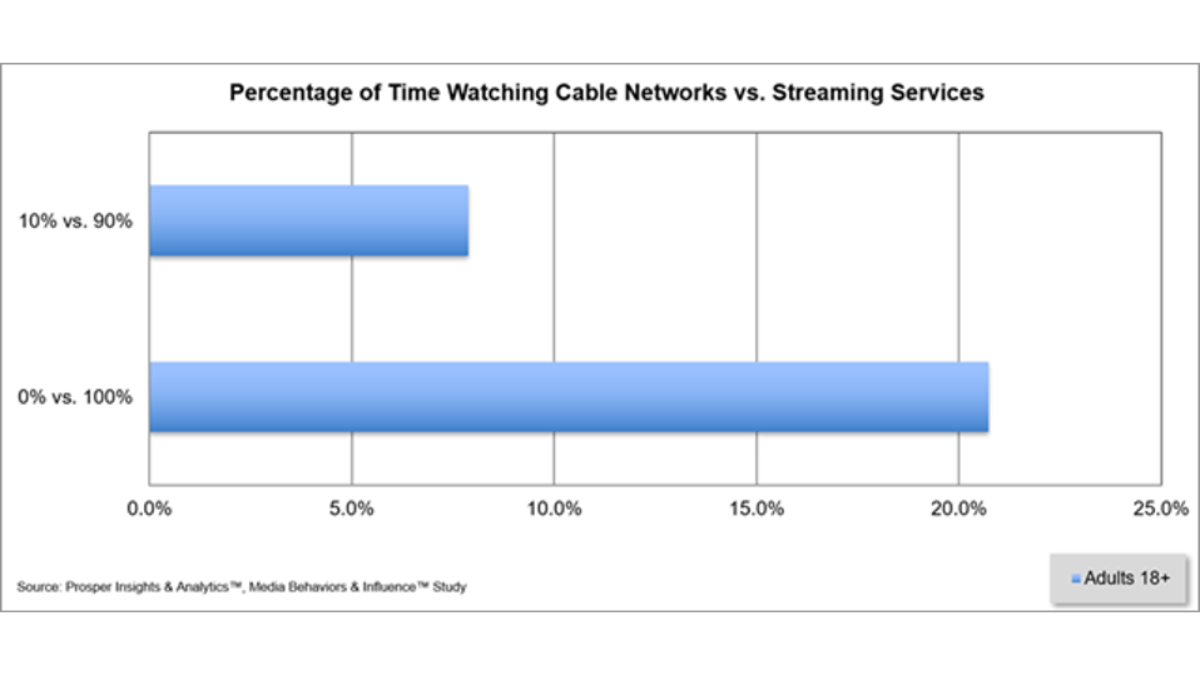
A recent survey from my company, Prosper Insights & Analytics, further illustrates how dramatically viewer behavior has shifted toward streaming. In its 2026 Media Behaviors & Influence study, 20.7% of U.S. adults reported that 100% of their television viewing now takes place on streaming services, while another 7.9% said streaming accounts for 90% of their TV consumption. Together, nearly three in ten consumers now watch television almost entirely through streaming platforms, reinforcing the scale of inventory growth reshaping the economics of TV advertising.
As more platforms launched ad-supported tiers and FAST channels expanded across the ecosystem, advertisers suddenly gained access to an unprecedented volume of impressions. But abundance creates pressure. When supply grows faster than meaningful differentiation, pricing weakens and advertisers begin demanding stronger proof of performance.
“The supply problem in streaming is real,” Tony Fagan, CEO of VideoAmp, told me. “When inventory expands without a consistent link to performance, pricing pressure becomes inevitable. The market needs a reliable way to separate inventory that actually drives results from inventory that simply adds volume.”
Read the Full Story: Forbes
September 30th -Beyond the Ad Break: Building a Smarter CTV Monetization Strategy
CTV advertising continues to grow, but capturing its full value requires more than simply adding inventory. Publishers and platforms must navigate fragmented demand, evolving advertiser expectations, measurement challenges, and the need to improve revenue without compromising the viewer experience.
Join OTT.X on September 30 for a timely conversation examining how better technology, more relevant ad experiences, and stronger collaboration across the ecosystem can create a more efficient and accessible CTV marketplace.
Key Areas of Discussion
- Turning underutilized inventory into sustainable revenue
- Creating clearer buying paths for advertisers of every size
- Moving beyond impressions to demonstrate measurable outcomes
- Using interactive, shoppable, contextual, and AI-enabled formats to increase engagement
- Delivering more relevant advertising while maintaining a strong viewer experience
- Building stronger connections among publishers, advertisers, and technology partners
Discover practical approaches to improving monetization, strengthening advertiser confidence, and creating more value from every CTV impression.
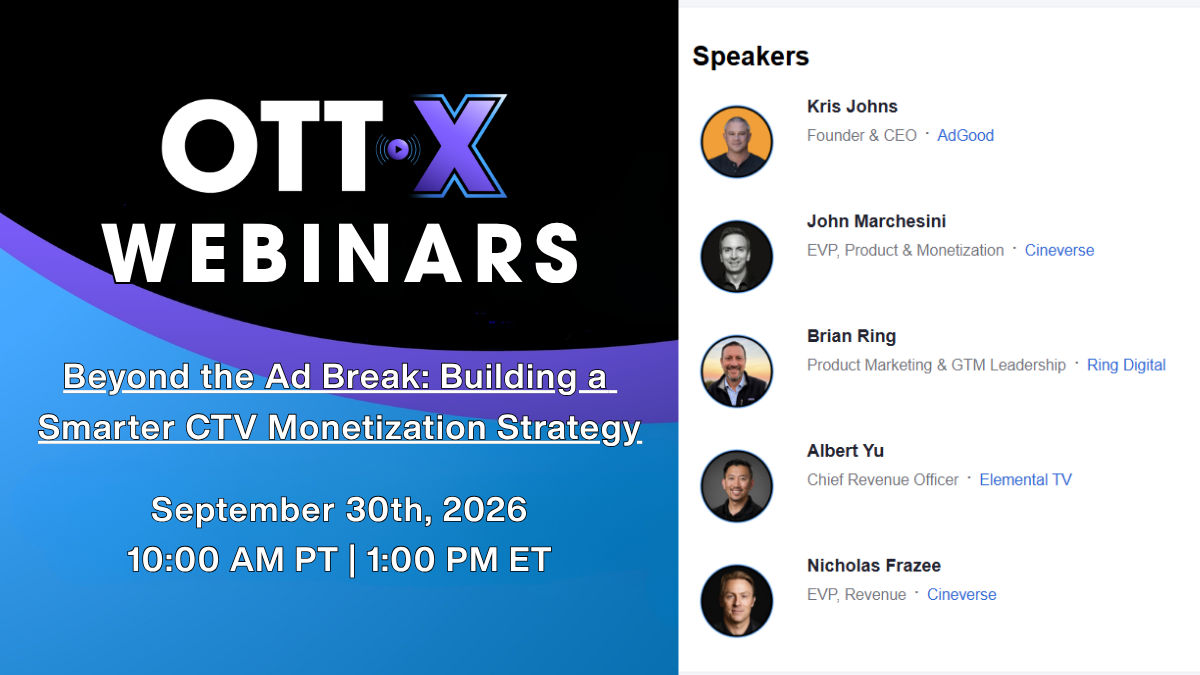
Cineverse’s Giant Worldwide Launches New Global Movie and Television Aggregation Service
Cineverse Sept. 10 announced that the newly-acquired Giant Worldwide, a Matchpoint company, has launched its own global movie and television aggregation service.
With this launch, Giant expands its content supply chain capabilities, with aggregation now available alongside its content ingest, packaging, automation, master QC, localization and digital delivery offerings.
This enables content owners and distributors — including studios and filmmakers — to bring content to market across TVOD, SVOD and AVOD platforms, while maintaining control of their content and rights.
Industry customers can now choose fully managed aggregation services, automated workflows, or a hybrid approach designed around their business needs.
“For more than two decades, Giant Worldwide has been a trusted partner to the media industry, helping clients navigate the complexities of content preparation, packaging, and global delivery,” said Meri Hassouni, SVP of global sales and marketing at Giant/Cineverse. “Expanding into aggregation is a natural evolution of our business and allows us to do the heavy lifting for our clients, driving new revenue, while allowing them to maintain their content rights.”
To lead the growth of this new aggregation service, which is available via rev-share and fee-based options, the company has appointed Natalie Buckley as VP of business development. Buckley joins Cineverse from Premiere Digital Services, bringing extensive experience in digital aggregation, platform partnerships and content distribution.
Read the Full Story: Media Play News
Hub: Younger Fans Fueling Uptick in Sports TV Viewership
At a time when media is spread across different platforms and services, sports remains one of the things that continues to pull people into traditional linear television — and increased viewership is largely thanks to younger fans who commit themselves to tuning in, according to a new report released this week.
The data is outlined in the latest installment of Hub Entertainment Research’s “Evolution of Sports — What’s the Score?” report, which found that fans under age 18 are about seven times more likely to say they are watching more sports on television than they were a year ago rather than less. That ratio is more than twice as high as among sports fans overall.
The increase appears to be driven more by interest than available time.
Among teens who said they are watching more sports, more than 2 in 5 attributed the change to stronger interest in sports generally or in a specific team or athlete. Fans ages 55 to 74 were more likely to say they were watching more because they had additional free time.
Younger fans are also consuming sports differently.
Hub found that 45 percent of sports fans under 35 get most or all of their non-live sports content from social media, more than four times the rate among fans 55 and older.
Social platforms are also becoming part of live viewing. Among fans ages 13 to 34 who use social media during a live game, 62 percent said their second-screen activity is related to the game itself, compared with 33 percent of fans ages 55 to 74.
The difference is even larger among fans who post to social media during games. Sixty-five percent of younger fans said those posts concern the game they are watching, compared with 29 percent of older fans.
Read the Full Story: TheDesk.net
In Case You Missed It
- College Football Found More Inventory. It Lost the Stakes. The Streaming Wars
- Streaming Is Separating Content Ownership From Customer Ownership. The Streaming Wars
- The Trade Desk Has $1.5 Billion in Cash and a Growth Problem. The Streaming Wars
- Channel 4 Is Cutting 28% of Its Staff to Keep Funding Shows. The Streaming Wars
- Warner Music Sued Suno. Now It Wants a Cut. The Streaming Wars
- Netflix Hid the Box Office. Now It Needs the Numbers. The Streaming Wars
- Your Streaming Service Is Someone Else’s Retention Strategy. The Streaming Wars
- Why Xbox Put a Meter on Cloud Gaming. The Streaming Wars
Powered by

FOR B2B TECHNOLOGY COMPANIES DONE BLENDING IN.
Most companies don't have a product problem.
They have a positioning problem.
43Twenty helps B2B technology companies define their category, sharpen their narrative, and build market perception that creates leverage.
Because when buyers understand why you matter, growth gets easier.
-
No buzzwords.
-
No content spam.
-
No shortcuts.
If everyone else sounds the same, that’s your opening.
We help you take it.