

Meta expects to record an approximately $10 billion legal expense after agreeing to restrictions on how Facebook and Instagram capture teen attention. During the same week, YouTube pushed back on proposed UK prominence rules, the BBC proposed a “public service algorithm,” Flipboard acquired technology that lets outside curators control and monetize feeds, and Roku turned NWSL discovery into exclusive rights.
The common thread is recommendation control. Home screens, feeds, ranking systems, and recommendation rails now determine who gets audience, advertising inventory, transactions, and negotiating leverage.
Streaming Is Raising Prices Faster Than Cable Ever Did
Read More

Which SVODs Did Cord Cutters Subscribe to in Q1 After Leaving Pay TV?
Read More
Roku Is Loosening Ad Control to Pull More Publishers Into Its Owned Services
Read More

September 30 - Beyond the Ad Break: Building a Smarter CTV Monetization Strategy
Read More

Can Microdramas Save Hollywood? Why the New Vertical Boom Isn’t Quibi 2.0
Read More

Hollywood Veterans Launch aTwist Microdrama Platform With Horror, Comedy and Animated Series
Read More
The Algorithm Just Hit the P&L
Meta expects to record an approximately $10 billion legal expense after agreeing to restrictions on how Facebook and Instagram capture teen attention. During the same week, YouTube pushed back on proposed UK prominence rules, the BBC proposed a “public service algorithm,” Flipboard acquired technology that lets outside curators control and monetize feeds, and Roku turned NWSL discovery into exclusive rights.
The common thread is recommendation control. Home screens, feeds, ranking systems, and recommendation rails now determine who gets audience, advertising inventory, transactions, and negotiating leverage.
The Take
Rights owners will increasingly negotiate distribution alongside rights fees. Streaming services will care about recommendation treatment alongside app availability. Creators and curators will seek a share of the economics generated by the demand they assemble. Regulators will keep defining which audiences and suppliers platforms can optimize around.
As recommendation becomes more measurable and more valuable, it becomes part of the deal itself.
Read the Full Analysis: The Streaming Wars
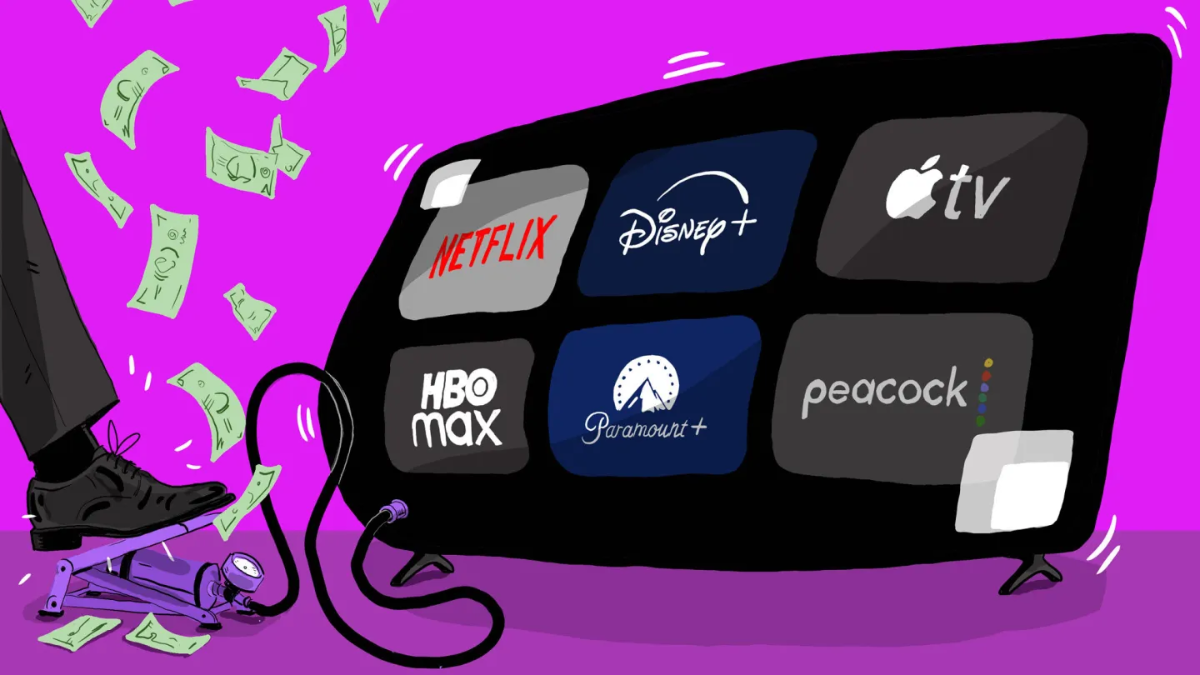
Streaming Is Raising Prices Faster Than Cable Ever Did
The cost to simply watch new TV shows is up — way up — with streaming services delivering one wearisome price shock after another that rival the worst of the cable and satellite price hikes of yesteryear. Since 2022, streaming prices have risen more than three times as much as inflation (which is also too high).
Behold some not-so-fun facts:
· The price of Apple TV has tripled. The streamer launched at just $4.99 in 2019. It’s jumped 200 percent despite having the thinnest library — in terms of quantity, at least — of the major streamers.
· Disney+ is right behind Apple TV. The service launched at $6.99 with no ads in 2019 and has since jumped to $11.99 with ads — or pay a whopping 172 percent more than its launch price.
· Paramount+’s cheapest tier is up 80 percent in five years. Netflix Premium is up 125 percent since 2013.
· If you want all eight major streamers without ads or bundle commitments, it’ll cost you about $151 a month. Four years ago, the comparable lineup cost about $90.
So you thought you cut the cord, but now you probably have four, five or six cords — and each is auto-drafting from your bank account so you can keep watching Love Island and Tulsa King.
The outlier here is HBO Max, having only climbed 23 percent over six years. HBO has been priced as a premium product for decades, however, and launched its streaming service in 2020 at a higher price point than the other services.
Read the Full Story: The Hollywood Reporter
Which SVODs Did Cord Cutters Subscribe to in Q1 After Leaving Pay TV?
The journey of consumers leaving traditional pay TV hasn’t always been that visible in terms of which services they land on in streaming after cutting the cord, but fresh data from Antenna sheds a little light on what was seen in Q1.
Per Antenna’s Cord Cutter Insights estimates, the first month after a consumer cancels an MVPD service is critical for sign-ups to a new streaming service, as 31% of cord-cutters do so within that window. The firm said cord-cutters sign up for streaming services at 5x the normal sign-up rate during that first month post-pay TV cancellation. It defines U.S. traditional cord-cutters as those who cancel and MVPD service and don’t sign up for a virtual MVPD or streaming pay TV service like YouTube TV or Sling TV within one month.
So which premium SVODs did U.S. traditional cord-cutters end up with in Q1 shortly after exiting traditional pay TV?
Antenna estimates show Paramount+ Premium as leading the pack while pricier ad-free tiers in general appear to be attracting cord cutters.
Before getting more into the findings, while shedding some light, it’s worth noting that Antenna data doesn’t draw a direct straight line from pay TV cancelation to new SVOD sign-ups for cord-cutters. It reaches estimates of cord-cutting cohorts (often inferred from credit card data based on the absence of payment on the subscriptions lapse date) and estimates top SVOD plan penetration rates for cord-cutters after pay TV cancelation (or the percent of the total cancel cohort that was subscribed to a given SVOD one month following their MVPD exit).
And those leaving pay TV aren’t entirely new to streaming services, so readers should keep in mind that Antenna estimates 72% of traditional cord cutters in the U.S. had at least one premium SVOD before they canceled pay TV.
Read the Full Story: StreamTV Insider
Roku Is Loosening Ad Control to Pull More Publishers Into Its Owned Services
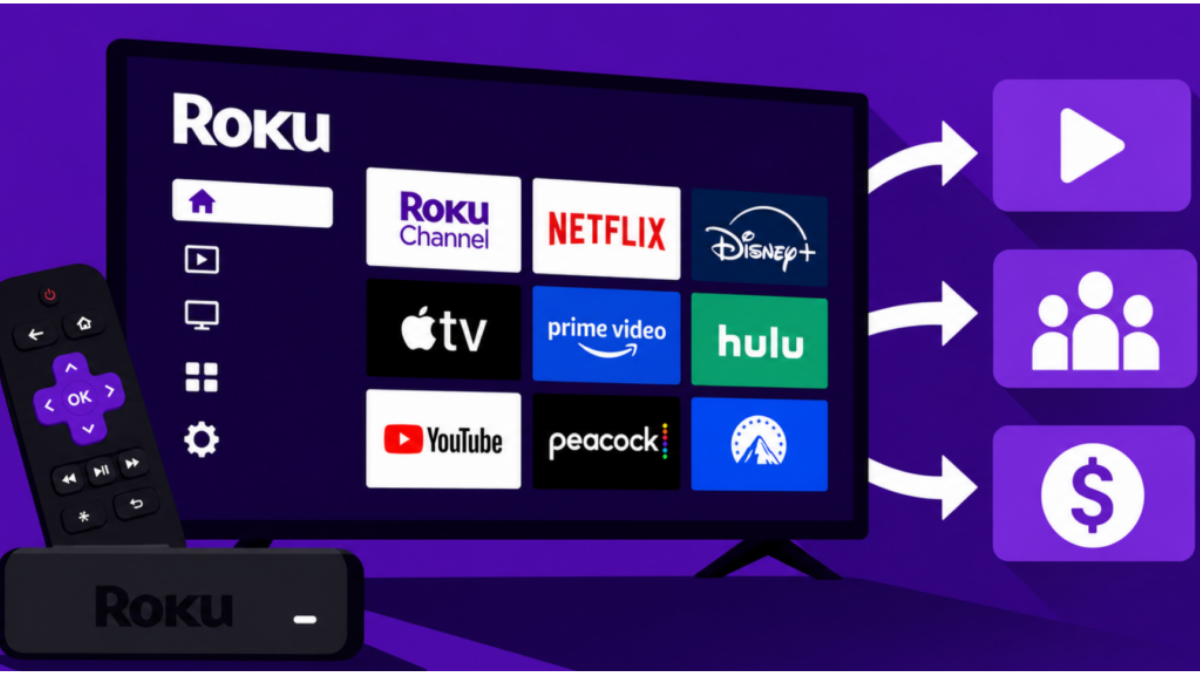
Roku is updating its Distribution Agreement on September 27 with a more flexible commercial framework for publishers distributing content inside Roku-owned destinations. The agreement adds standard terms for branded paid subscription services that don’t require a separate Roku app, introduces Partner-Sold Inventory for approved partners, raises Roku’s fee on certain international advertising revenue from 15% to 20%, and moves paid-app revenue from monthly to quarterly payouts.
The biggest change is Partner-Sold Inventory. Roku currently controls 100% of ad sales against content submitted under the standard agreement’s TRC Distribution model. PSI gives selected publishers a way to sell advertising directly while their content remains inside a Roku-owned service, reducing one of the tradeoffs between Roku-controlled distribution and publisher-controlled monetization.
App-Less Distribution Already Exists, but the Standard Agreement Is Expanding What Can Live There
Roku’s current Distribution Agreement already allows publishers to distribute content through The Roku Channel without publishing a corresponding app. That existing model, called TRC Distribution, is explicitly defined as ad-supported distribution.
The current agreement also defines The Roku Channel, or TRC, more broadly than the name suggests. TRC can mean one or more Roku-owned and Roku-branded content distribution services accessible through apps, websites, device interfaces and other digital points of presence. The underlying legal structure already gives Roku room to distribute partner content across Roku-owned destinations rather than confining it to one literal app.
Read the Full Story: The Streaming Wars
September 30th -Beyond the Ad Break: Building a Smarter CTV Monetization Strategy
As ad-supported streaming captures a growing share of television viewing, the opportunity for publishers, platforms, and advertisers continues to expand. At the same time, fragmented buying paths, inconsistent measurement, underutilized inventory, and pressure to prove real business outcomes are preventing the industry from realizing CTV’s full revenue potential.
Join OTT.X on September 30 to explore how streaming companies can unlock more value from their advertising inventory while delivering stronger experiences for advertisers and audiences.
Key Areas of Discussion:
- What advertisers need from CTV publishers before increasing investment
- How publishers can improve inventory utilization, yield, and revenue without increasing ad load
- Practical approaches to measurement, attribution, and proving outcomes beyond impressions
- The potential of interactive, shoppable, contextual, and AI-enabled advertising
- How premium CTV advertising can become more accessible to organizations and advertisers of every size
Discover the strategies, technologies, and partnerships shaping a smarter and more effective CTV marketplace. Gain practical insights that can help your organization maximize the value of every impression and capture more of CTV’s growing potential.
Can Microdramas Save Hollywood? Why the New Vertical Boom Isn’t Quibi 2.0
Hollywood is approaching the microdrama space with more reasonable investments and expectations. And this time, there’s plenty of proof that it might work. After all, the microdrama boom that took off earlier this decade in China — where tech platforms were focused on churning out addictive serialized shorts on the cheap — is already here.
Some creators and stars see this as a steppingstone to entering the mainstream, but inside the growing microdrama industry, the goal is simply to make habit-forming content for viewers on their phones.
Is there ultimately any money to be made in the microdrama space? Can this expanding industry give a struggling Hollywood workforce a shot in the arm? Or is this Quibi all over again?
“These were gaming companies and tech companies who created them based on a totally different model that’s all about feeding dopamine releases,” says Vertical Romance co-founder and producer Enzo Semmens. Semmens, who wrote the primer “Cliffwriting: The Microdrama Blueprint Hollywood Hates,” adds, “An episode is just a game of ‘Candy Crush.’ At the end of it, you have your cliff-hanger, and you want to play to get to the next level.”
As the Chinese microdramas made their way west, U.S. platforms like DramaBox and ReelShort led the charge, spending millions of dollars to market the shorts to users and quickly building up a marketplace. With their low budgets and often cheesy storylines, microdramas were seen as a new take on an old genre — the TV soap opera — with one major difference. “They’re soap operas for the ADHD generation, because you’re taking out all the filler,” says former Showtime and ABC exec Jana Winograde, now the co-founder of microdrama studio and platform aTwist.
Read the Full Story: Variety
Hollywood Veterans Launch aTwist Microdrama Platform With Horror, Comedy and Animated Series
The new microdramas platform from Hollywood veterans Jana Winograde, Susan Rovner and Lloyd Braun has launched with an initial slate of projects spanning the horror, comedy and animation genres.
On Thursday aTwist debuted in the U.S. and in seven other countries with the ambition to blend Hollywood-level storytelling with the twisty, addictive tropes of the burgeoning verticals format. The platform launched with 10 original series, including titles from The Bold and the Beautiful executive producer and head writer Bradley Bell and Abominable Pictures founder and Childrens Hospital executive producer Jonathan Stern.
New series drop on Thursdays. Viewers can watch some episodes for free by viewing ads and can watch entire series by buying “coins” (a virtual currency) or buying an aTwist subscription.
While romance stories currently dominate top vertical platforms, aTwist is launching with a mix of genres. One of its inaugural titles, Cash Out, is unscripted: It follows a woman on the mend from a broken relationship who is given $50,000 to spend in Vegas with her two best friends. Two titles, Something Is Alive in My Attic and Strangers, A Plane and a Deadly Game, are horror stories. I Fell in Love With the Dragon Prince, a fantasy-romance combo, is animated.
There’s even a microdrama spoof series launching, from Abominable Pictures’ Stern, called My Billionaire Kidney. The logline? “A down-on-her-luck Cinderella-type becomes a pawn to her evil aunt and uncle and multiple absurdly powerful men as they fight for her kidney. Will she finally find a way to control the chaos and choose herself?”
Soap opera veteran Bell, meanwhile, is behind a series called Hollywood Starlet, about a cleaner and aspiring actor who finally gets her shot at stardom when she attracts the romantic attentions of a well-known actor.
Read the Full Story: The Hollywood Reporter
In Case You Missed It
-
- Why Streaming Services Are Turning Their Audiences Into Channel Stores. The Streaming Wars
- Is High Churn Actually Bad for Niche Streaming?. The Streaming Wars
- Vodafone Built a TV Service Without Making a Single Show. The Streaming Wars
- Amazon Is Becoming the App Store for Local Sports. The Streaming Wars
- The Cavs and Spurs Took Back the Broadcast. DAZN Got the App. The Streaming Wars
- Sky Gave Disney+ 1.1 Million Homes It Didn’t Have to Win. The Streaming Wars
- Sony Doesn’t Need a TV OS. It Has the PS5. The Streaming Wars
- Apple TV Raised Its Price Until Peacock Became Free. The Streaming Wars
Powered by

FOR B2B TECHNOLOGY COMPANIES DONE BLENDING IN.
Most companies don't have a product problem.
They have a positioning problem.
43Twenty helps B2B technology companies define their category, sharpen their narrative, and build market perception that creates leverage.
Because when buyers understand why you matter, growth gets easier.
-
No buzzwords.
-
No content spam.
-
No shortcuts.
If everyone else sounds the same, that’s your opening.
We help you take it.